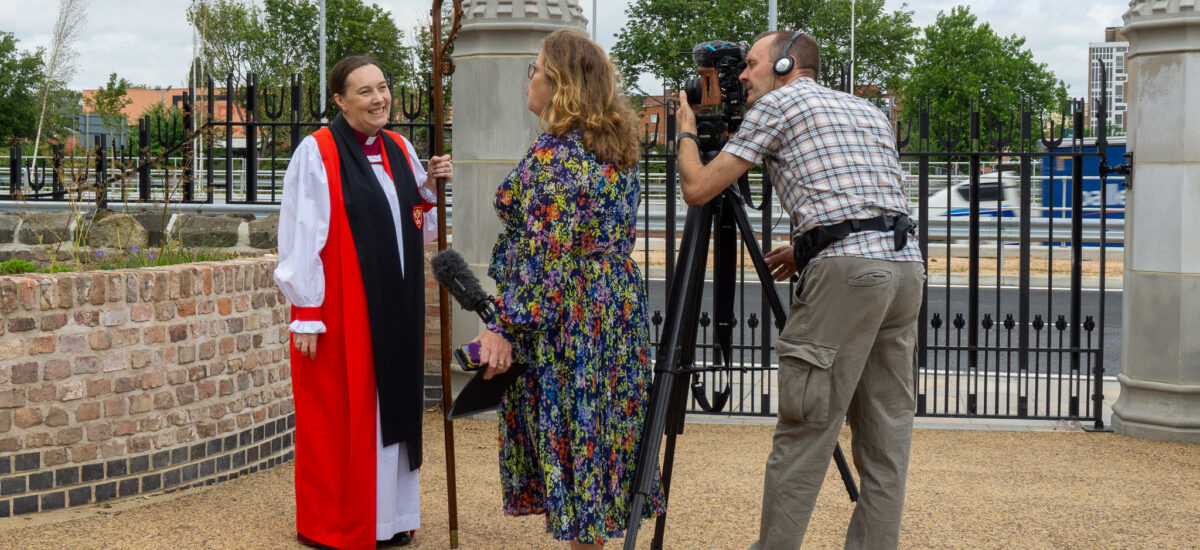
The Rt Revd Dr Eleanor Sanderson, Bishop of Hull, today rededicated Hull Trinity Burial Ground, marking a new chapter for one of the city’s most historic sites.
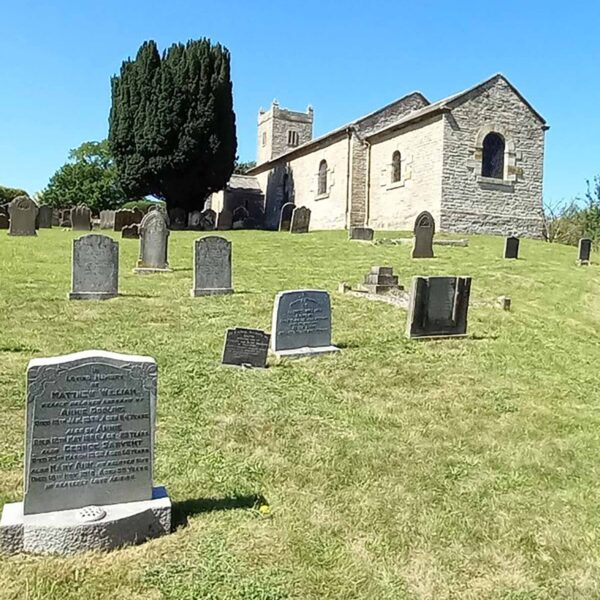
The burial ground was opened in 1785 to relieve pressure on the churchyard at Holy Trinity Church, now Hull Minster, which had become full as Hull’s population grew. The site closed to burials in the late 19th century and, in recent years, had become overgrown and unloved.
In a project first discussed over a decade ago, part of the burial ground was excavated during the A63 Castle Street improvement scheme. Archaeologists estimate that around 45,000 people were buried across the whole site. Around 9,500 full sets of remains were carefully exhumed and studied by Oxford Archaeology, supported by a team of around 70 archaeologists in what was the largest exhumation of bodies in the North of England.
The retained area has since been landscaped as an open and accessible space for the community, with new planting designed to increase biodiversity and provide safe habitats for wildlife. Selected headstones and memorials have also been retained, offering a visible link with generations of Hull people and the city’s seafaring history.
Children from Inmans Primary School also took part in the ceremony, reading some of their “letters to the future”, which were placed in a time capsule and buried on the site.
The event is expected to feature on this evening’s BBC Look North and BBC Radio Humberside.