In the Diocese of York, racial justice is supported by our Racial Justice Education Adviser, Gerald Fox. In this nationally funded role, Gerald encourages learning, conversation, and action so that churches can reflect more fully on what it means to live Christ’s story in their communities.
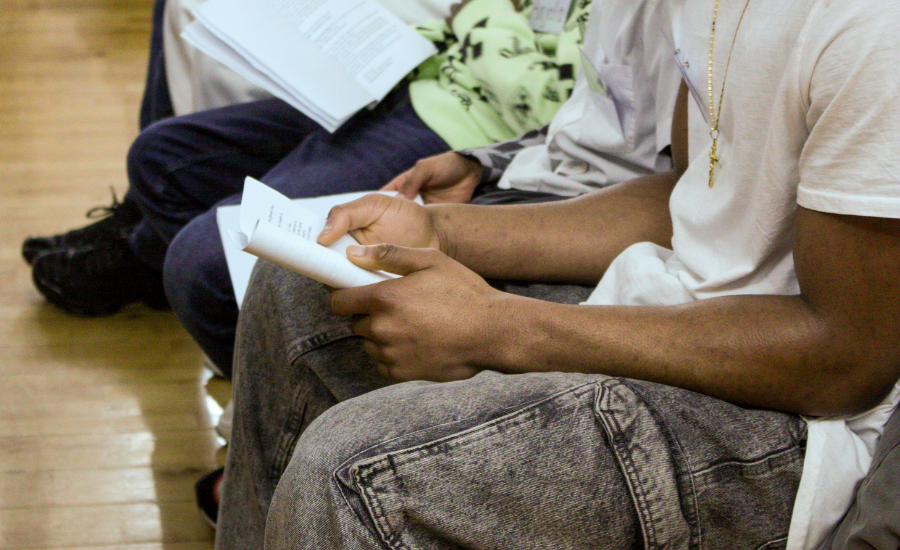
This year’s event was held on Monday 22 March at St Martin’s Conference Centre, next to Leicester Cathedral, now widely known as the resting place of King Richard III. Here, Gerald reflects on the day and some of the key themes that emerged
The biblical foundation for racial justice
After a welcome and opening prayers, the Revd Canon Guy Hewitt, Director of the Racial Justice Unit, gave a presentation on growing social polarisation and the rise of Christian nationalism. He told us that there is currently a national, bishop-led working group looking at these issues and seeking to shape a church response.
Guy suggested that the context for both our Christian faith and the work of racial justice can be found in scripture, including 1 John 4:16, “God is love, and those who abide in love abide in God, and God abides in them”, and Luke 10:27, “You shall love the Lord your God with all your heart, and with all your soul, and with all your strength, and with all your mind; and your neighbour as yourself.”
He went on to say that welcoming and loving the stranger is an imperative that flows from our belief in the imago Dei – that every person is made in the image of God. He argued that growing polarisation in society is often driven by people holding tightly to social identities rather than to our identity in Christ.
He also said that, because of our unity in Christ, we cannot reject those who come to faith, including those drawn from the far right. At the same time, we must be ready to challenge anyone who seeks to distort the Christian faith for their own agenda.
Responding to a divided society
Guy also reflected that the work of racial justice is harder now than it was five years ago, when the Archbishops’ Racial Justice Taskforce published From Lament to Action. Hostility towards migrants, pressure on charities working with diverse communities, and public resistance to the accommodation of other faiths were all named as signs of a more difficult climate.
Part of the response to these developments, he said, is to remind people that we do not flourish alone. In Ubuntu this is expressed in the phrase, “I am because we are.” We need to resist the temptation to exclude and recover a sense of the common good. In times of economic pressure, people can become more fearful and more likely to look for someone to blame. What follows is often the dehumanising of others.
He argued that the Church must respond with the radical inclusiveness of Jesus. We are called to love even those who hate or oppose us, and we can only do that by the grace of God. We cannot fight hate with hate. As the established Church, the Church of England is uniquely placed to play an important role in addressing increasing social polarisation. We must use our presence in the public square for the public good.
Guy’s presentation was followed by a discussion of the issues and challenges he had raised.
Shared learning from across the dioceses
The rest of the day was given to updates from the dioceses represented at the gathering. Each person was asked to share one highlight to celebrate, one insight they had gained, and one challenge they were facing. Representatives attended from 17 dioceses, including York. There was also representation from the West Midlands Racial Justice Initiative, a collaboration between Birmingham, Coventry, Gloucester, Hereford, Lichfield and Worcester, as well as from Gypsy, Roma and Traveller Friendly Churches.
Several common themes emerged. Many dioceses are now delivering unconscious bias training and raising awareness of racial justice by speaking at deanery synods. There is also significant work taking place to help people understand the theological and scriptural foundations of racial justice. A number of dioceses have created, or are developing, anti-racist toolkits for use in parishes and benefices.
A shared priority was how to embed this work in the everyday life of the Church. What that looks like varies from diocese to diocese, but there was agreement that episcopal support is one of the keys to progress. That is something we are fortunate to have in York through the support of The Rt Revd Barry Hill, Bishop of Whitby.
Shared challenges
Several challenges were also identified. One was the absence of good data. Without a clear baseline, it is difficult to measure progress or celebrate change.
Another was the reduction in funding available for this work in the next triennium. The budget has been reduced significantly, and many of those present were employed on fixed-term contracts funded through the Racial Justice Unit. There is real concern that if those posts end, we could lose the momentum of this work.
A third challenge was the continued pushback and resistance that racial justice work can still provoke.
The road ahead
Overall, it was a very encouraging and uplifting gathering. It provided valuable opportunities for networking, useful sharing of information, and mutual support. The Racial Justice Unit will continue to facilitate monthly online meetings throughout the year for those involved in racial justice work across the Church.
If you would welcome a conversation about racial justice in your church, please contact Gerald Fox, Racial Justice Education Adviser, at gerald.fox@yorkdiocese.org.