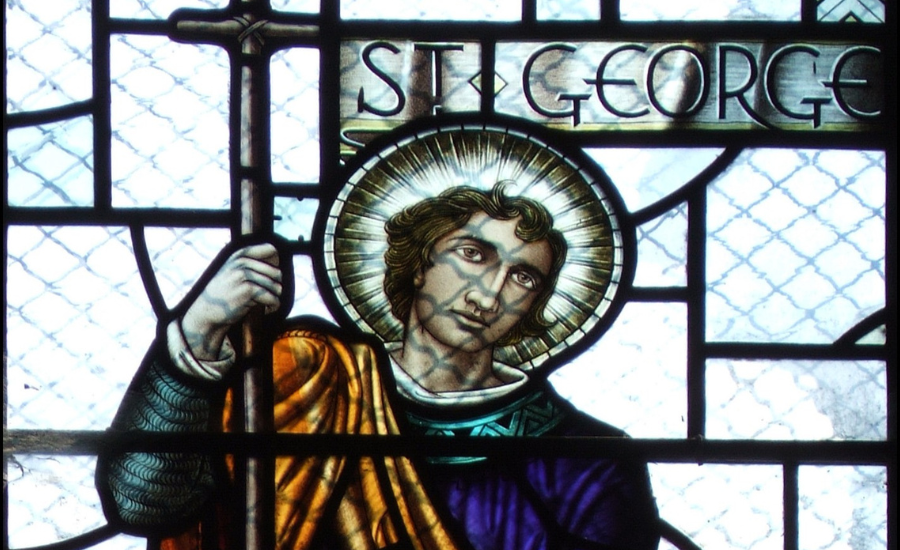
We might not usually mark St George’s Day differently from other saints’ days. Yet in recent years, St George and the stories, symbols, and ideas associated with him as England’s patron saint have been drawn into debates about identity, belonging and nationhood. Alongside England, St George is also a patron Saint of Ethiopia, Georgia, Greece, Bulgaria, and Catalonia, as well as cities like Genoa, Moscow and Beirut.
Some of the rhetoric surrounding St George’s Day can feel far removed from the gospel. When Christian symbols are used to exclude, intimidate, or suggest that England belongs more fully to some people than others, they are being used in ways that do not reflect what it means to live Christ’s story and the inclusive message of the Gospel.
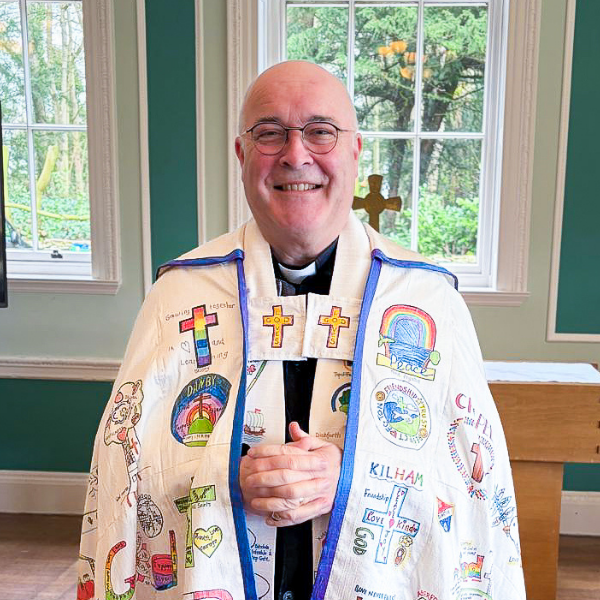
Bishop of Kirkstall and joint Lead Bishop for Racial Justice, the Rt Revd Arun Arora has previously spoken of the need to embrace and reclaim St George’s Day, with a “positive patriotism rooted in Gospel values.” Christians need not be hesitant, he says, about celebrating the communities and country we serve, but our love of place must always be shaped by the love of God, which is for everyone.
Earlier this year, the Church of England Bishops’ Working Group for Promoting Unity in our Nation said that the flag of St George “cannot be owned by any one group or cause” but should instead be seen as “a symbol of unity, inclusion and our common life around which we all gather.”
“In less than two months, we’ll be reminded of Baddiel and Skinner’s classic anthem Three Lions on a shirt, as we sing – and many of us pray – that England bring home the Men’s Football World Cup. As we prepare to fly the flag of St George both on 23rd April and this summer in support of our football team, it’s a great opportunity to remember that we are England united – united across difference, in service of our neighbour, a service at the heart of our Christian heritage.”
The Rt Revd Barry Hill, Bishop of Whitby and Episcopal Lead for Intercultural Ministry in the Diocese of York
The Church of England has a presence in every community and exists for all who live in this country. We are not only the Church of England, but a Church for England. That means standing for the common good, seeking justice, peace and reconciliation, and recognising the innate dignity of every person as someone loved by God.
Churches are often at the heart of their communities, listening to people who feel unheard or overlooked. Many people are facing the strain of rising costs and reduced local services, and, as Christians, we are called to respond with compassion and to speak truthfully to those with power.
At the same time, we hear the concerns of those who feel threatened when migrants are blamed for wider economic and social challenges. Too often, this has led to racist abuse and violence, leaving people feeling less safe in their communities.
Churches are uniquely placed to create space for honest and respectful conversations about faith, identity, and belonging. They can be places where people are heard with empathy and where Christ’s story is lived out in love for our neighbours.
To mark St George’s Day, the Church of England has produced resources to help churches and groups explore the person of St George, what he represents, and the role he plays in the formation of both our Christian and English identities.
This St George’s Day, may we celebrate a more Christ-like nation, marked by courage, compassion, and love for all.
Resources
Celebrating St George, martyr and Patron saint of England – The Church of England
Myths, Miracles, Mysteries, Mission – following the Saints | Church of England Faith and Public Life Team
A Prayer for the Feast of St George
who so kindled the flame of love
in the heart of your servant George
that he bore witness to the risen Lord
by his life and by his death:
give us the same faith and power of love
that we who rejoice in his triumphs
may come to share with him
the fullness of the resurrection;
through Jesus Christ your Son our Lord,
who is alive and reigns with you,
in the unity of the Holy Spirit,
one God, now and for ever.
Amen
.