Archbishop’s Presidential Address to York Diocesan Synod, 20 June 2026
Archbishop Stephen gave an address to the York Diocesan Synod today.
There is one bit of Bible that my children definitely know and learnt at a very young age. More than John 3.16 or John 10.10 or Psalm 23, or all those other very famous mountain top verses from scripture, as they were growing up they knew by heart Proverbs 6. 6. Along with a medley of other verses from scripture, bon mots and helpful sayings, I used to say it to them as they left for school each morning, shouting down the path after them – and if by chance some of you cannot immediately bring this verse to mind, let me refresh your memory –
“Go to the ant thou sluggard, and learn to be wise.”
This verse, is first of all, and incidentally, one of many examples in scripture where we learn wisdom, and are invited to learn wisdom, from close observation of the natural world and, therefore, I think we have to concede in today’s world, by implication, our lack of attention to the rhythms, patterns, perspectives and interconnected harmonies of that natural world is making us rather less wise than our predecessors and not nearly so clever as we like to think ourselves to be.
But that is incidentally; this address is not primarily about the environmental crisis we face and the challenge to the Church to offer our world a lead, telling a different and better story of how we live more lightly upon the earth and more harmoniously with the created world of which we are meant to be stewards. No, that’s not the purpose of this address, though these, of course, are vital, vital issues for the way we live Christ’s story together.
No, this address is really about what we can learn from observing the tiny ant, who, (to quote Frank Sinatra) can, with high hopes, move a rubber tree plant, and how their industry, purposeful collaboration and united effort give us a picture of what we can be and achieve when we work together, including and honouring each part of that Body which is the Church of Jesus Christ.
Last week on the back of some teaching engagements at the General Seminary in New York, Rebecca and I had a bit of holiday, which was great, and we visited the New York Museum of Modern Art, and there is in there at the moment, a wonderfully powerful video installation of a colony of ants cleaning up litter after a concert, fragment by tiny fragment. I also remember, I don’t know whether any of you read that book when it came out 20 years or so ago by Brian Keenan, An Evil Cradling, and where he’s telling the story of the harrowing account of his long, long incarceration. And there’s a wonderful passage in the book where his close observation of the ants, with whom he shares the cell and the way they worked together, gave him great hope in isolation, hope that we human beings could also find a way of collaborating purposefully with each other.
And I know this is a theme we have returned to many, many times in the past year, but it is one of the central themes of scripture and it is something that we need to choose and work at each day, valuing the gifts and giftedness of each person, honouring those who could easily be left behind or excluded, recognising how much more we can achieve when we work together, acknowledging that we belong to each other through our baptism and that we are less the Church that God wants us to be and the Church God shows us in Christ, when we give in to division, when we go it alone. And again and again, scripture suggests that observing ants, considering lilies, looking at birds, may be a better source of wisdom to consult than Co-Pilot and ChatGPT: “Go to the ant, thou sluggard, and learn to be wise.”
Our conference next month will provide a wonderful opportunity for deepening this sense of belonging and common purpose, and I am so looking forward to it and so grateful for those who are putting it together. And there are, of course, other things on our agenda this morning that invite us to find common purpose, common goals and better ways of working together.
The other thing I notice about ants, which I also notice in huge shoals of fish, and with those amazing, beautiful murmur of starlings in the autumn sky, is that it doesn’t appear that anyone is in charge. There’s not a CEO ant or a chief executive starling. They work together. Each knows its place, each has a role and a specialism. They are interdependent and adaptable. Ants are even able to build huge living bridges over obstacles in their path. Leadership is either constantly swapping from one to the other, or is somehow collectively held by the whole and communicated in purposeful partnership. I’m afraid we are at the far limits of my knowledge of ants. And no, I didn’t spend hours researching about ants online. So I’m afraid I can’t tell you anymore or quite how it happens. But this is what I notice.
Within the Body of the Church, it is both the same and different. Because of our baptism we aspire to that beautiful close working together with leadership and ministry expressed by the whole; but we also know that Christ is our Head and that the Holy Spirit is our Guide. And within our own tradition – and I say this especially mindful that new deacons and priests will be ordained in our diocese next week – God raises up women and men to exercise particular responsibilities with and for the whole.
Please pray for those of us who have received this calling. That we may be humble, wise and purposeful in our oversight of the Church. And that we hold to our vision of ministry belonging to everyone. To the whole people of God.
Please pray for those who are to be ordained next week. Please pray that God will raise up more ministers of the gospel, both lay ministers and ordained ministers, and that we can really nurture this vision that all of us have a share in ministry, flowing from and serving that common vision, where together we are called to be a royal priesthood, a holy nation, a spiritual house, a blessed colony of ants, a murmur of starlings. All of us called to declare the wonderful deeds of him who has called us out of darkness into his marvellous light.
Diocese of York shares Church of England’s apology for historical adoption practices
The diocese shares the Church of England’s national apology for its historic role in adoption practices linked to mother and baby homes.
Please note: This page may include references to historical adoption practices, separation of mothers and babies, stigma, and experiences of trauma and lasting emotional harm. Details of support services are also included below.
Bishops in the Diocese of York today share the Church of England’s national apology for its historic role in adoption practices linked to mother and baby homes and express their sorrow for the deep and lasting harm caused to families.
Research has shown that, while some homes offered care, others denied dignity, choice, and compassion. While some adoptions were wanted and led to loving families, others involved pressure and the removal of choice. We recognise the harm caused when dignity was not upheld and apologise for the role the Church played in this system.
The Rt Revd Dr Eleanor Sanderson, Bishop of Hull, who serves on the diocese’s Safeguarding Advisory Panel, said: “Our first responsibility is to listen carefully and respond with compassion, openness, and honesty. Anyone who has been affected should know that support is available, whether through our diocesan safeguarding team or specialist services. Although social attitudes may have changed, that does not lessen our need to acknowledge harm, listen to those affected, and respond well today.”
The diocese is preparing to support anyone who comes forward by ensuring that staff, clergy, and safeguarding colleagues are ready to respond sensitively and clearly. It has reviewed links to former mother and baby homes and has published clear pathways for enquiries and support, available at www.dioceseofyork.org.uk/hap.
Anyone affected by historical adoption practices is encouraged to seek support from the diocesan safeguarding team or from one of the relevant agencies on the diocese’s support and advice webpage.
Archbishop to ordain five new Deacons to serve in Diocese of York
The Archbishop of York, Stephen Cottrell will ordain five people as deacons within the Church of England in York Minster on Saturday 27th June 2026 in a service beginning at 11.00am.
The Archbishop of York, Stephen Cottrell will ordain five people as deacons within the Church of England in York Minster on Saturday 27th June 2026 in a service beginning at 11.00am. The preacher will be the Rt Revd Dr Flora Winfield, Bishop of Selby.
Deacons are called to work in the community and assist in church; each candidate will serve as Assistant Curate in a parish within the Diocese of York, the Church of England between the Rivers Humber and Tees and between the A1 and the Yorkshire coast.
The five candidates are Phoebe, Dave, Oliver, Caroline, and Mike. Profiles of the candidates are listed below.
Archbishop Stephen said, “All of us are called by God, and in each generation God raises up women and men to serve as deacons and priests in the Church. It has been great to meet with Phoebe, Dave, Oliver, Caroline and Mike who will be ordained as deacons in the Church of God in York Minster this month. As they approach their ordination, I give thanks for the gifts they bring and the faithfulness they have shown. Please join me in praying for them and the parishes where they will serve.”
The candidates, and the parishes in which they will serve, are as follows:
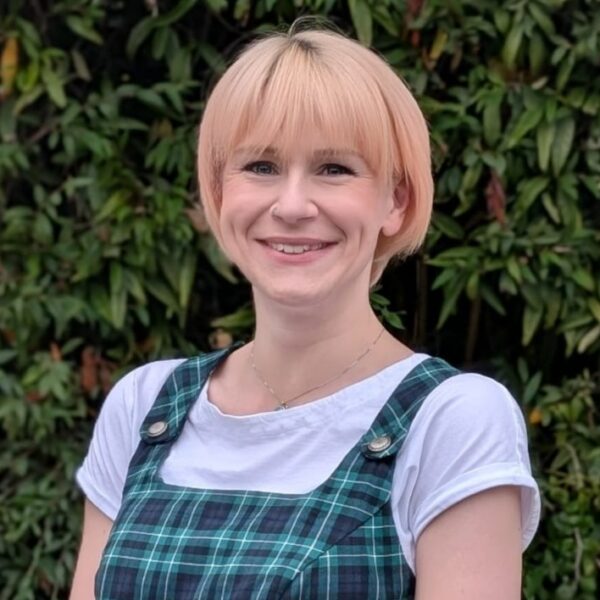
Phoebe Power
Phoebe will serve as Assistant Curate in the parish of Marfleet, Hull.
“I first came to faith through singing choral Evensong when I was a student. A few years later, another key step on my journey was walking the Camino de Santiago pilgrimage. I was able to deepen my experience of the Christian life through being part of St Luke’s Church community in York, and by volunteering at the breakfast charity, Carecent, in the city centre.
“After experiencing a sense of call to ordination I began studying theology part-time at York School of Ministry, and have continued my studies at Cranmer Hall in Durham. Before training I worked as a poet and creative writing teacher, and I’m looking forward to finding creative ways to help others encounter God as I start my curacy.
“I’m excited to accept the call to the East Riding and to get stuck in to living alongside and learning from the people of East Hull.”
Dave Kelsall
Dave will serve as Assistant Curate in the parishes of St Paul’s and St Barnabas, York.
“For the last three years I’ve been studying at St Hild in Sheffield, whilst also serving a placement at Clifton Parish Churches in York. In the summer, my family and I will be moving to St Paul’s and St Barnabas in York, where I’ll be serving as their new curate.
“When asked the question, ‘what are we excited for?’, I know it’s naff to say, but we’re really just excited to see what God has in store. I’ve learned a long time ago that God’s plans are always way better than mine, so I’m really excited to see what he has planned for our next season.”
Oliver Murray
Oliver will serve as Assistant Curate in the parishes of Loftus and Carlin How with Skinningrove.
Having not grown up as a practising Christian, Oliver came unchurched to faith as an adult. He is an award-winning filmmaker, having recently produced short films on some of the Northern Saints: “I’m captivated by how story, symbol, and place can open up deeper encounters with God.”
Reflecting on his calling, he says: “As a storyteller from the moment I was first trusted to hold my dad’s video camera, I’ve long been drawn to the power of narrative. Over time, I came to see that the Christian faith is not simply an idea, but something to be lived and encountered – particularly through the sacraments and through pilgrimage.”
Oliver hopes to use his creative work in the service of the Church, helping to communicate the living reality of Jesus Christ and the spiritual life to which the Church calls us, in a way that may connect with people today. Oliver is married to Bonnie, and they have two young children, Elizabeth and William.
“I am hugely grateful to St Mary’s Church in Thirsk, where I was first warmly welcomed as a new Christian, and also to St Hilda’s Church in Grangetown, where I’ve been on placement this past year. I am delighted to be joining Loftus and Carlin How with Skinningrove for my curacy, and cannot wait to work alongside and serve the church communities there.”
Caroline Wandless
Caroline will serve her curacy in the Rivers Partnership, Derwent Deanery.
Caroline says, “It will be a huge privilege to serve within the community where I was born, baptised, went to school, confirmed, on the PCC, Churchwarden and still live with my husband Roger.’
A retired Civil Servant, Caroline responded to God’s call in her late 50s. For many years she had a feeling she was being called to ordination, but always came up with many reasons why it couldn’t possibly be her. When the feeling wouldn’t go away Caroline finally took what felt like a huge step, to approach her Priest-in-charge for a conversation, which led her into the formal discernment process.
Caroline has undertaken her Ordination training through St Hild’s College, Mirfield, which she found “truly foundational” and has relished the rich, diverse environment.
“I believe both visibility and Community are hugely important. I am really looking forward to getting to know, and being part of all the Communities within the Rivers partnership, walking alongside people during the highs and lows and helping all to see, feel, experience and know the love of God.”
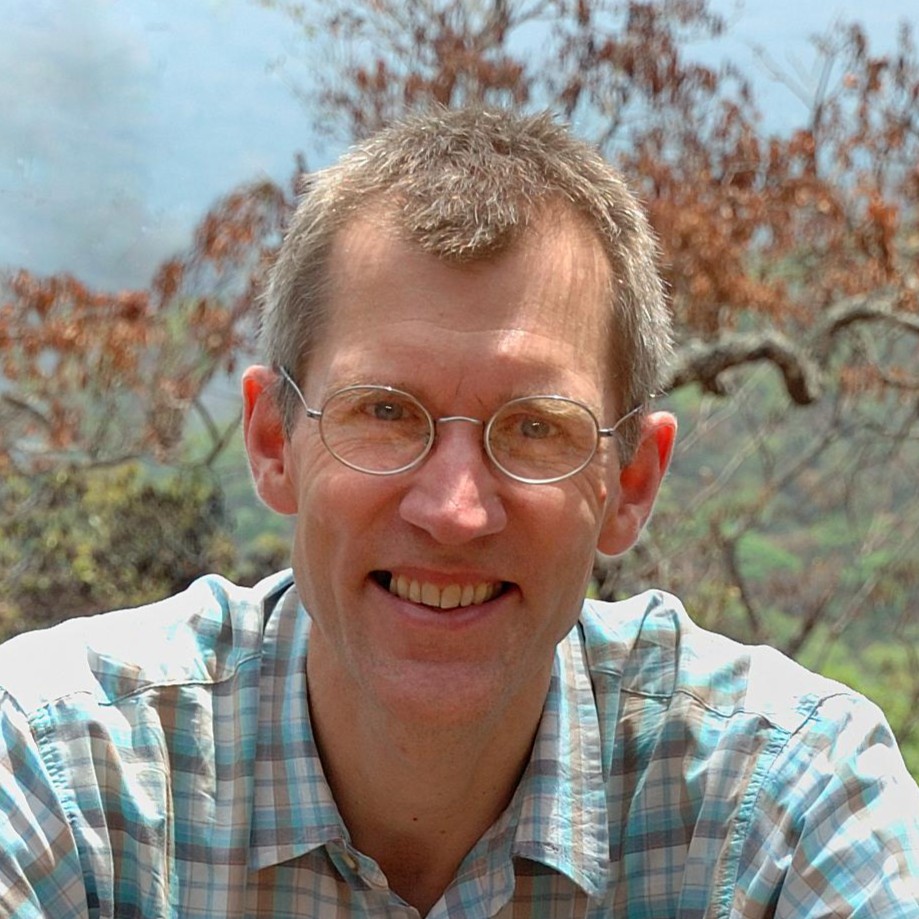
Mike Beresford
Mike will serve as Assistant Curate in the Rivers Partnership, Derwent Deanery.
Mike is married with two adult children. He came to faith in Jesus whilst at university. After a career in engineering project management, he became director of a mission that partners with churches in Malawi and Mozambique. To equip himself for this, he studied for six years for a part-time degree in theology at York School of Ministry. Although he had worshipped at a Baptist Church in York since moving to the area in the early 90s, he recently felt a growing sense of call to rural parish ministry in the Church of England. He retired in 2024 to focus on discernment for ordination and has been training since last September at St Hild College in Mirfield.
Mike says, “I am so thankful to everyone who has supported, encouraged and prayed for me in my journey towards ordination and parish ministry. I’ve been so excited to see how God mysteriously draws people to Himself – and it is humbling to be invited to step forward and participate in His ministry”.
The Revd Steve Wilcox appointed Associate Archdeacon of Hull
The Associate Archdeacon role will help turn Living Christ’s Story into action across Hull Deanery
The Revd Steve Wilcox has been appointed Associate Archdeacon of Hull, bringing extensive experience of ministry, mission, and church life across the Humber region.
Steve has served in the area throughout his ordained ministry. For the past 15 years, he has been Vicar of St Peter’s, Anlaby, and St Mark’s, Anlaby Common, where he has championed mission and helped local people grow in discipleship.
Steve has served on Diocesan Synod since 2018 and is currently a member of General Synod and the Heart for Hull working group. He also sits on the steering group for Hull 2030: an ecumenical network that brings Christians from different churches together to pray and work for the revitalisation and planting of churches across Hull.
Bishop of Hull, The Rt Revd Dr Eleanor Sanderson, said, “Steve has been passionate and dedicated to the Heart for Hull project since its beginning within Living Christ’s Story. I trust in God’s invitation for us to continue as partners in the gospel, serving together the churches of Hull and the people of the city and Deanery.
“I have been struck recently by the motto for Hull City ‘one family, one dream’, which has been shared a great deal in recent weeks. Steve and I share this commitment to our family of churches in Hull, and a longing to experience the fullness of God’s vision, God’s story, and God’s Kingdom coming among us.”
The Associate Archdeacon role will help turn Living Christ’s Story into action across Hull Deanery, which has a population greater than some dioceses. Working with the Bishop of Hull, the Archdeacon of the East Riding, and local churches, Steve will support the next stage of Heart for Hull by serving and strengthening clergy and lay leaders, supporting collaboration, and helping churches respond confidently to their communities’ needs.
Hull is a city with a strong identity and deep resilience, but also considerable challenges. Through championing local gifts and innovation, the Associate Archdeacon role aims to help churches build on what God is already doing, bringing together pastoral care, practical support, and missional leadership. At its heart, the role is about supporting a flourishing and sustainable Christian presence across Hull.
Could you stand for General Synod?
Clergy and lay people across the Diocese of York are invited to consider standing for General Synod.
New clergy and lay members will be elected to General Synod this autumn, and people across the Diocese of York are invited to consider standing.
General Synod is the national assembly of the Church of England. It helps shape the life of the Church by making decisions that affect parishes, chaplaincies, schools, and communities across the country. It agrees new forms of worship, considers matters of national and international importance, approves Church legislation, and agrees the annual budget for national Church work.
Those elected in 2026 will serve for five years. General Synod includes bishops, clergy, and lay people.
You may be eligible to stand as a lay member if you attend church regularly. You do not need to be a member of a PCC, deanery synod, or diocesan synod.
We are keen to encourage candidates who reflect the full breadth of people, places, and churches across the Diocese of York and the wider Church of England. We particularly welcome interest from people whose voices and experiences may currently be underrepresented.
New members are supported through an induction programme, so you do not need to know everything about General Synod before standing.
Why consider standing?
Standing for General Synod is an opportunity to:
represent the concerns, hopes, and experiences of your community and diocese at national level
have a say in decisions that affect the whole Church of England
contribute to debates on social, policy, and public issues
meet Anglicans from across the country and the wider Communion
play a part in helping the Church live Christ’s story today, in and for the world
For many people, serving on Synod is challenging, interesting, and rewarding.
What does a General Synod member do?
General Synod members take part in debates, propose and vote on motions, serve on committees, and review legislation.
Members bring their own experience, faith, and perspective to the work of the Church. You do not need previous experience in public speaking or formal Church governance.
You will need to be someone who listens well, reflects prayerfully, and is willing to contribute thoughtfully to discussions.
What is the commitment?
If elected, you would be expected to attend each meeting of General Synod for the next five years.
General Synod usually meets twice a year, once in London and once in York. Each meeting lasts up to five days. It is possible to attend meetings either in person or online.
In your first year, you would also attend an additional three-day meeting in London.
Is the role paid?
The role is voluntary and unpaid. Travel and accommodation expenses are covered.
Use the eligibility checker or contact kirsty.mccullough@yorkdiocese.org at the Diocese of York to confirm whether you are eligible to stand.
2. Nominations
Nominations open on 14 August 2026 and close on 7 September 2026.
Lay candidates need two people who are members of a deanery synod to nominate them. Clergy candidates need two other clergy to nominate them.
The diocesan office will provide a nomination form. This must be completed and signed by the people nominating you.
3. Statements and hustings
Candidates will be asked to write an election statement. You may also be asked to record a video or give a short talk at a hustings event.
A hustings is a chance for voters to hear from candidates about why they are standing and what they would bring to the role.
4. Voting
Voting runs from 21 September to 13 October 2026.
Lay members of deanery synods in the Diocese of York vote for lay candidates. Clergy in the Diocese of York vote for clergy candidates.
5. Results
Those elected will attend General Synod for the first time at its meeting in London in November 2026.
York Diocesan Synod: agenda 20th June 2026
A meeting of the York Diocesan Synod will be held on Zoom on Saturday 20th June 2026 commencing at 9.30am.
A meeting of the York Diocesan Synod will be held on Zoom on Saturday 20th June 2026 commencing at 9.30am. It is hoped that the meeting will finish just after 1pm.
The business to be discussed at the meeting will include:
The York Diocesan Synod is the governing body of the Church of England in our diocese.
It considers matters sent to it from General Synod and from deaneries, formulates diocesan policy, advises the Archbishop as appropriate, and votes on the funding of stipends and administration. Lay and ordained members elected by Deanery Synods serve for three years.
All Synod meetings are open and public (unless it is a meeting in closed session for a specific item), but only members are entitled to speak or vote.
New deanery team ministries celebrated at Pentecost
Pentecost marked the beginning of two new team ministries in the Mowbray Deanery.
Two special Pentecost services marked the beginning of new team ministries in the Mowbray Deanery, following the completion of a two-year process of deanery reorganisation.
The reorganisation, which was formally completed by the Church Commissioners in February, creates two geographical teams within the deanery: North Mowbray and South Mowbray. The new structure will support informal team ministry, encourage and grow lay ministry, and help churches share resources, gifts, and experience more effectively across the deanery.
Both celebration services were led by The Rt Revd Barry Hill, Bishop of Whitby, and The Ven Amanda Bloor, Archdeacon of Cleveland. They included the commissioning of lay ministers, as well as the licensing of incumbents.
The first service took place at 3.30pm on Sunday 24 May at All Saints, Northallerton, celebrating the new North Mowbray Team Ministry. During the service, the Revd David Johnson was licensed at All Saints.
A second service followed at 7.00pm at St Oswald’s, Sowerby, celebrating the new South Mowbray Team Ministry. This service included the licensing of the Revd David Biggs at St Oswald’s.
The celebrations offered a moment of thanksgiving for the ministry already shared across the deanery, and a hopeful step into a new season of working together in living Christ’s story.
Great Ayton hosts service for RAF pilot buried 86 years after death
A Cleveland parish remembers one of their own.
A North Yorkshire parish has remembered one of its own after Squadron Leader George Morley Fidler, a Second World War RAF pilot from Great Ayton, was laid to rest in France 86 years after he was killed.
The Revd Sarah Cliff, Vicar of Great Ayton with Easby and Newton under Roseberry, supported by local historian Ian Pearce, initiated a service of remembrance at Christ Church, Great Ayton, so that the village could mark the moment locally while Squadron Leader Fidler was buried with full military honours in France.
The service was attended by representatives from RAF Leeming’s 607 Squadron and the Commonwealth War Graves Commission, Lord-Lieutenant of North Yorkshire Johanna Ropner, The Countess Peel DL, as well as pupils from Marwood CofE Infant School and members of the local community.
Fidler, known as Morley, was born in Great Ayton in 1912. His name is recorded on the war memorial at Christ Church, alongside other men from the village who lost their lives in the Second World War.
He joined the Royal Air Force in 1934 and was serving with 607 Squadron when his Hawker Hurricane was shot down over northern France on 19 May 1940. He was 27.
For many years, Fidler was believed to have been buried in the village of Bachy, near Lille. Later research showed that this was not the case. In 2005, metal detectorists discovered wreckage 35km away at Oisy-le-Verger, including a piece bearing the serial number P3535, suggesting that it came from Fidler’s Hurricane. The Ministry of Defence then investigated the grave at Bachy and, after uncertainty over the original identification, the headstone there was changed to read “unknown Airman”.
In 2022, work on the Seine-Nord Canal at Oisy-le-Verger unearthed a Hurricane with the pilot still inside, close to where Fidler’s aircraft had last been seen. Ministry of Defence investigators identified him through a process of elimination, testing samples from three other pilots lost that day.
Fidler was laid to rest at the Commonwealth War Graves Commission London Cemetery and Extension, Longueval, on 19 May 2026, exactly 86 years after his death.
Revd Sarah Cliff said: “Squadron Leader Fidler, alongside so many others, answered the call, served with honour, and gave his life in the service of his nation. I just thought we needed to do something to remember a life lost, but also to remember the shape of this country, which has been made by those communities changed forever by loss of life: children not born, families not happening. He walked these streets. He was baptised in this church. It’s really important that we honour him, and that we honour all those who died, whether it was last week or 86 years ago.”
The service at Christ Church gave people in Great Ayton an opportunity to gather, pray, give thanks for Fidler’s courage, and remember the human cost of war. It also connected the burial in France with the village where his story began.
The story featured on last night’s ITV Tyne Tees. Watch again here:
Farewell to Archdeacon of the East Riding, Andy Broom
Ahead of Archdeacon Andy's move to his new role in Howden, there will be an opportunity to say farewell to Andy in a service at Beverley Minster.
Ahead of Archdeacon Andy’s move to his new role in Howden, there will be an opportunity to say farewell in a service at Beverley Minster.
Reflecting on his time as Archdeacon of the East Riding, Andy said: “It has been a great joy and privilege to serve as archdeacon. I have loved the variety of the churches and people across the archdeaconry, and the opportunity to serve the wider diocese. The role of archdeacon is both demanding and stimulating, and I hope, in some small way, I have supported and enabled our churches as they live Christ’s Story.
“This opportunity came unexpectedly, and I am excited about what God might do across Howdenshire. I feel very blessed to have this fresh call, and partnering with St John’s and the Diocese of Sheffield brings an extra dimension full of possibilities.”
The service at Beverley Minster will take place on Tuesday 30 June at 7.30pm. To find out more and to book a free ticket (this helps us to plan), please visit Eventbrite.
York Diocesan Synod will meet on Zoom on Saturday 20th June.
A meeting of the York Diocesan Synod will be held on Zoom commencing at 9.30am. The meeting will finish around 1.00 pm.
The Business to be discussed at the meeting is anticipated to include:
Living Christ’s Story and the Multiply Report
Annual Reports and Accounts 2025
2026 Financial Update
Audit Committee Report
Net Zero Carbon Action Plan
Statutory annual reports
The full agenda will be published at least a week before the meeting.
Agenda Items, Questions or New Business requests
Under Standing Orders any other business for the meeting shall be in writing, signed and sent by email attachment to kirsty.mccullough@yorkdiocese.org or delivered to the Secretary, York Diocesan Synod, Diocese of York, Amy Johnson Way, Clifton Moor, York YO30 4XT by hand or by post, not later than the period before the meeting specified below.
New Business for the Agenda: to arrive by 4.00pm, Friday 15th May
*Questions, Motions and Amendments: to arrive by 4.00pm, Friday 12th June
*Members are reminded that under Standing Orders they are entitled to submit two original questions for answer at a meeting of the Diocesan Synod, and a member who has asked a question may ask one supplementary question in respect of each original question. Questions shall not ask for an expression of opinion or for the solution of either an abstract legal question or a hypothetical problem, and should relate to the business or duties of the committee chair or officer addressed.
The York Diocesan Synod is the governing body of the Church of England in our diocese.
It considers matters sent to it from General Synod and from deaneries, formulates diocesan policy, advises the Archbishop as appropriate, and votes on the funding of stipends and administration. Lay and ordained members elected by Deanery Synods serve for three years.
All Synod meetings are open and public (unless it is a meeting in closed session for a specific item), but only members are entitled to speak or vote.
A new collection for churches across the diocese to engage with pilgrimage.
Working with our friends at Faith in the North and York Minster, the Diocese of York has launched a new collection of pilgrimage resources to help churches explore faith, welcome communities, and discover fresh opportunities for mission and discipleship.
Pilgrimage has long been part of the Christian tradition, offering a way of deepening faith through intentional journeying.
Pilgrimage has long been part of the Christian tradition. It offers people a way to deepen their faith through intentional journeying. Today, pilgrimage continues to help people notice God’s presence in places, in people, and in everyday life. For churches, it can open new ways of inviting people into faith and creating spaces of welcome and encounter.
To support this growing work, the Diocese of York’s Pilgrimage Working Group has brought together ordained and lay people from across the diocese, alongside colleagues from Faith in the North and York Minster. Together, they have created a range of new resources for churches, including a practical toolkit and a small group resource.
Last month saw the launch of Faith in the North’s new project, ‘Pilgrim Places’, which invites churches to register as a place of welcome, rest, and peace. Many churches across the diocese have already registered their church as a Pilgrim Place, offering signage, prayer cards, and reflective trails to visitors.
Alongside this, the Church of England has recently published Pilgrim Places, Holy Lives, a new summer reflection campaign centred on pilgrimage and the stories that shape our journey with God. The booklet includes daily readings and reflections exploring eight places and the saints connected with them. Contributors include Archbishop Stephen Cottrell, Diocesan Discipleship Adviser Sammi Tooze, and Faith in the North’s Professor Dee Dyas OBE. These will be shared on the Church of England’s Everyday Faith app from the day after Pentecost (25th May) until 21st June.
The new diocesan toolkit encourages churches to explore pilgrimage creatively. It includes ideas for prayer journeys within church buildings, connecting churches through walking routes, engaging children and young people, using the arts and imagination, and ensuring pilgrimage activities are accessible and sustainable.
The accompanying small group resource invites people to reflect on what it means to be God’s pilgrim people today. Sessions explore discipleship, mission, encounter, living as a pilgrim, and the pilgrimage of the soul.
Sammi Tooze, Diocesan Discipleship Adviser, said:
“It’s a great joy to see pilgrimage growing across our diocese, in many creative ways. I’ve been inspired to see the ways churches have offered something deeply missional to their communities, which enables us to encounter God along that journey and discover something of faith.
“The collaborative work between our Diocesan Pilgrimage Group and Faith in the North has been incredibly fruitful, and it’s great to be able to share these materials now to offer guidance, ideas, and support in exploring the creative ways we can all engage with pilgrimage in our local place.”
Movements of clergy and others, into, out of and between posts in the Diocese of York.
Movements of clergy and others, into, out of, and between posts in the Diocese of York
The Revd Lois Claire Beynon, Vicar of the Clun Valley Benefice in the Diocese of Hereford, has been appointed as Vicar of the Benefice of Bridlington Emmanuel and Barmston with Fraisthorpe. Her collation by the Bishop of Hull will take place in the parish church of Emmanuel, Bridlington, on Tuesday 28th July 2026 at 7.00pm.
The Revd David James Biggs, Priest‑in‑Charge of the Benefice of Sowerby, held in plurality with the Benefice of Sessay and Thirkleby w Kilburn & Bagby, has been appointed as Vicar of the Benefice of Sowerby. His collation by the Bishop of Whitby will take place in the parish church of St Oswald’s, Sowerby, on Sunday 24th May 2026 at 7.00pm.
The Revd Jonathan Charles Dean, Assistant Curate of the Benefice of Great Ayton with Easby and Newton under Roseberry, was licensed as Assistant Curate, known as Associate Priest, of the same benefice by the Bishop of Whitby on Monday 27th April 2026.
The Revd Jackie Doyle‑Brett, Priest‑in‑Charge of The Rivers Partnership, was appointed as Rector of The Rivers Partnership. Her institution by the Archdeacon of York took place in the parish church of St Helen’s, Escrick, on Tuesday 21st April 2026.
The Revd Clive Richard Hall, Interim Minister (Associate Vicar) of the South Holderness Coast Benefice, with particular responsibility for the parish of Withernsea with Owthorne, was appointed Area Dean of South Holderness for a period of five years with effect from Tuesday 24th March 2026. He succeeded the Revd Alisdair Laird and was commissioned in a private ceremony on the same date.
The Revd Helen Jones, Hospital Chaplain at York and Scarborough Teaching Hospitals NHS Trust, has been appointed additionally as Assistant Curate (training) in the Benefice of Heworth Holy Trinity and St Wulstan for a period of two years. She was licensed by the Bishop of Selby on Monday 27th April 2026 at the parish church of Holy Trinity, Heworth.
The Revd David Johnson, Priest‑in‑Charge of the Benefice of Northallerton with Kirby Sigston, has been appointed as Vicar of the Benefice of Northallerton, Romanby and Kirby Sigston. His institution by the Bishop of Whitby will take place in the parish church of All Saints, Northallerton, on Sunday 24th May 2026 at 3.30pm.
The Revd Alisdair Mark Laird, Vicar of the Benefice of Easington w Skeffling, Keyingham, Ottringham, Patrington, Welwick and Winestead, has been reappointed to his interim roles for a further period of three years. These are Interim Priest‑in‑Charge of the Benefice of Burton Pidsea, Humbleton w Elsternwick, Halsham and Thorngumbald; Interim Assistant Curate of the Benefice of Hedon, Paull, Sproatley and Preston in Holderness; and Interim Priest‑in‑Charge of the South Holderness Coast. His relicensing will take place in a private ceremony on Thursday 7th May 2026.
The Revd Linda Jane Maslen, Church Leader of Fountains Church, Bradford, in the Diocese of Leeds, has been appointed as Vicar (0.5) of the Benefice of Rural Ainsty. Her collation by the Bishop of Selby will take place in the parish church of St Helen’s, Church Bilton, Ainsty, on Tuesday 7th July 2026 at 7.30pm.
The Revd Bill Merrington, Chaplain of Pocklington School, will retire on Monday 31st August 2026.
The Revd Johannes (Jan) Nobel, Interim Priest‑in‑Charge of the Benefice of Osbaldwick with Murton and part‑time Green Ambassador for the Diocese of York, has been appointed as Rector of the Benefice of Guisborough. His collation by the Bishop of Whitby will take place in St Nicholas’ Church, Guisborough, on Thursday 3rd September 2026 at 7.00pm.
The Revd Jane Robson, Priest‑in‑Charge of the Benefice of Kirkleatham, has been appointed as Vicar of the Benefice of Kirkleatham. Her collation by the Bishop of Whitby will take place in the parish church of St Cuthbert’s, Kirkleatham, on Monday 22nd June 2026 at 7.30pm.
The Revd Peter Francis Roberts, Rector of Monk Fryston and South Milford, and Assistant Curate of Haddlesey with Hambleton and Birkin with particular responsibility for the parish of Birkin, retired on Friday 1st May 2026. His final service took place on Sunday 12th April 2026.
The Revd Christine Ann Strand will be licensed as Assistant Curate, known locally as Associate Vicar, of the Benefice of Bridlington Christ Church with Bessingby and Ulrome, for a period of two years. The licensing by the Bishop of Hull will take place in a private ceremony on Wednesday 24th June 2026.
The Revd Nikki James Blanton Stevenson, Prison Chaplain at HMP Kirk Levington, will resign with effect from 31st May 2026 to become Pioneer Team Rector of the Crosslacon Benefice in the Diocese of Carlisle.
The Revd Canon Tessa Stephens, Vicar of the Benefice of Nunthorpe, has been reappointed as Area Dean of Stokesley Deanery for a further period of five years with effect from Monday 27th April 2026. She was commissioned by the Bishop of Whitby on the same date.
The Revd James Andrew Trowsdale, Rector of the Benefice of Ampleforth with Oswaldkirk, Gilling East and Stonegrave, has been additionally appointed as Hospital Chaplain for York and Scarborough NHS Trust. His licensing by the Archdeacon of Cleveland will take place on Wednesday 20th May 2026.
The Revd Catherine Jane Toase, Assistant Curate of the Benefice of Skelton w Shipton and Newton on Ouse, retired on Wednesday 31st December 2025.
The Revd Maxine Dawn Waller, Priest‑in‑Charge of The Beacon Benefice, has been appointed as Rector of The Beacon Benefice. Her institution by the Bishop of Hull will take place in the parish church of St Martin, Burton Agnes, on Wednesday 20th May 2026 at 7.00pm.
The Revd Huw Waring, Assistant Curate of the Benefice of Rudston, Boynton, Carnaby, Kilham, Burton Fleming with Fordon, Grindale and Wold Newton, will be licensed as Assistant Curate of the Hertford Benefice. The licensing by the Bishop of Hull will take place in a private ceremony on Tuesday 16th June 2026 at the parish church of All Saints, Kilham.
The Revd Stephen (Steve) Whiting, Priest‑in‑Charge of the Benefice of The Forest of Galtres, will retire on Friday 31st July 2026.
The Revd Nigel Christopher James Wright, who holds the Archbishop’s Permission to Officiate in the Diocese of Leeds, has been appointed as Assistant Curate, known as Associate Priest, of the Benefice of the South Mowbray Rural Parishes. His licensing by the Bishop of Whitby will take place in the parish church of All Saints, Thirkleby, on Wednesday 1st July 2026 at 7.00pm.
Nominations now open for RECOGNISE 2026
Churches across the Diocese of York are invited to nominate children’s, youth, and family workers for RECOGNISE 2026, a Church of England initiative celebrating the people who help children, young people, and families grow in faith.
RECOGNISE Week, taking place from 6 to 12 July 2026, shines a light on the people who serve children, young people, and families in churches across the country. Launched in 2025 by the national 30K Project, the initiative is part of the Church of England’s wider vision to raise up 30,000 new children and youth ministers, both voluntary and employed, by 2030.
Churches are encouraged to recognise the people whose ministry makes such a difference in local communities. This includes children’s group leaders, crèche volunteers, baby and toddler group leaders, youth leaders and volunteers, and family workers.
A diocesan panel will review parish nominations and select one nominee from each archdeaconry to go forward for national recognition. This year’s celebration event at Bishopthorpe Palace takes place on Monday 6 July.
We use small files called cookies to make this website work. With your permission, we would also like to use cookies to understand how people use the website. This helps us improve it. You can accept or reject these cookies, and you can change your choice at any time
Essential
Always active
These cookies are needed for the website to work properly. They support basic functions and cannot be switched off.
Preferences
These cookies remember choices you make, such as your language or display settings, so the website can provide an experience tailored to you.
Statistics
These cookies help us understand how people use the website, for example, through Google Analytics. The information is collected anonymously and helps us improve the site.The technical storage or access that is used exclusively for anonymous statistical purposes. Without a subpoena, voluntary compliance on the part of your Internet Service Provider, or additional records from a third party, information stored or retrieved for this purpose alone cannot usually be used to identify you.
Personalisation
These cookies help us understand your interests so we can show or send you content that is more relevant to you. They may also track how you use this and other websites.